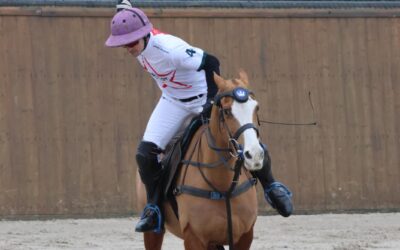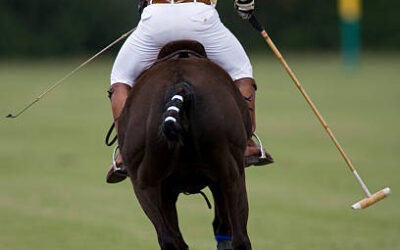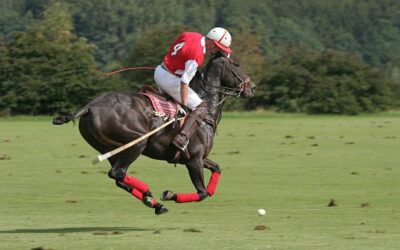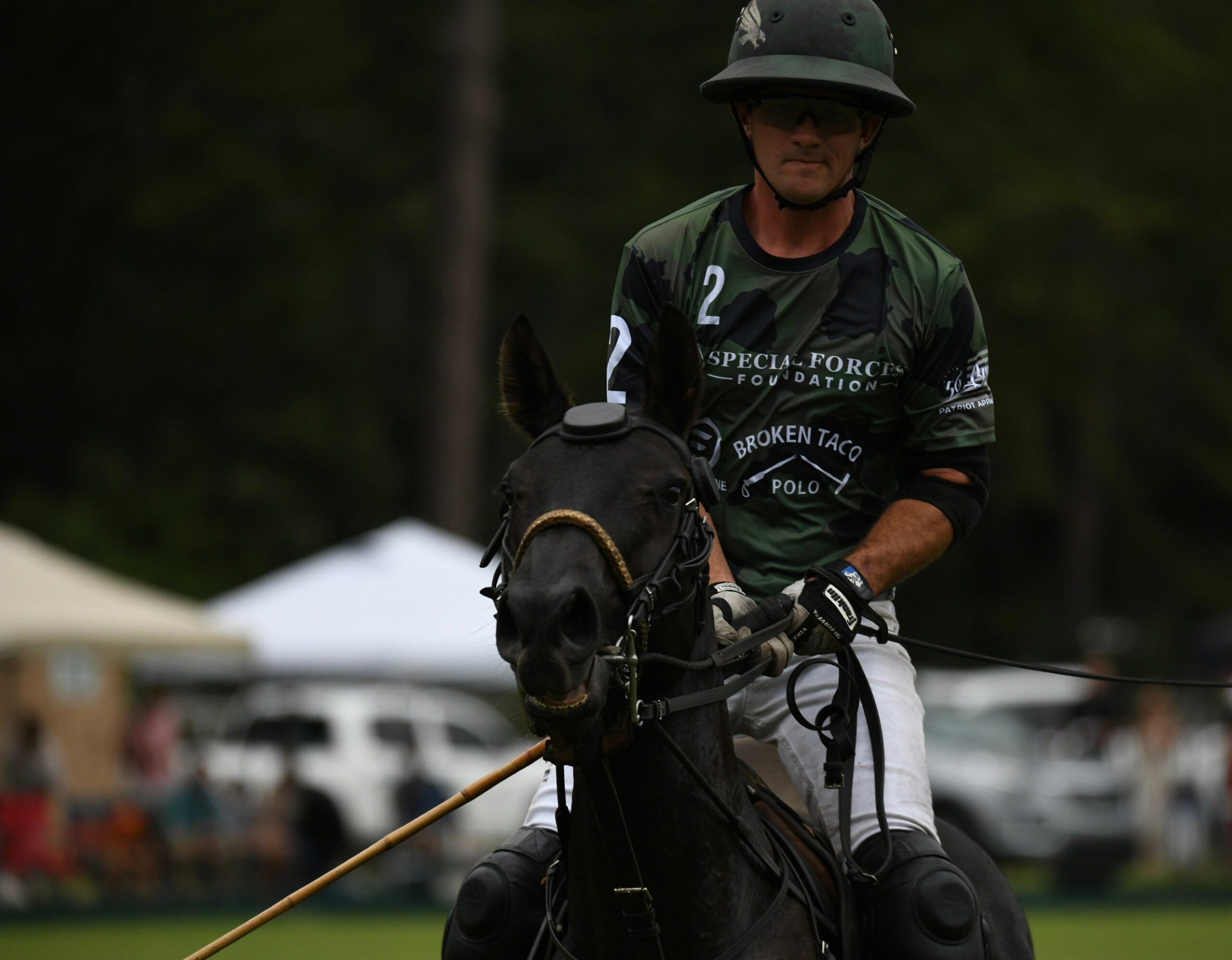
I will focus on the player’s body weight and self-carriage to appreciate the magic of great polo horses.
“I didn’t touch him with the rein — I just sat differently or turned my head, and he turned.”
That’s a common phrase among players who have ridden a true crack (a top-class horse).
1) Body weight as language
In high-level polo, aids or commands — the reins, the voice, the legs — are only part of the repertoire. The most powerful communication happens in silence.
The weight of the body, a subtle rotation of the pelvis, and the transfer of pressure from one stirrup to the other are minimal variations which, when well executed and received, can trigger complex maneuvers: sharp turns, side changes, immediate stops. Here we enter the realm of the invisible aid or postural aid.
The player doesn’t need to pull on the reins or push; he simply places his body in a particular way — and the horse understands. The best players do this even at full gallop, when they are half-off the saddle in a hitting position. The horse feels it all the same.
2) Self-carriage: the hidden key of the refined player
The term self-carriage (in Spanish propioporte) refers to the rider’s ability to support his own body without letting dead weight fall on the horse’s back.
It is more than balance — it is active postural control, the precise muscle tone and awareness of how to position oneself with a moving horse. A player with self-carriage becomes a clean, precise aid. His body doesn’t interfere — it guides. By contrast, a player who “hangs” or leans on the horse creates confusion and stiffness. A sensitive horse blocks, loses fluidity; it’s as if communication shuts down.
3) Shared proprioception: a common channel of perception
Proprioception is the ability to sense one’s own body in space. In polo, when horse and player reach fine attunement, something fascinating occurs: shared proprioception. Both bodies feel each other. The horse perceives where the player is without looking, and the player senses what the horse will do before it happens.
In such moments, they move as if they shared a single nervous system — forming what could be called a functional unity between horse and rider. The rider’s reflexes — like the oculomotor reflex (which begins with sight, is processed in the brain, and flows through the body) — transmit downward, and the horse responds even before the command becomes conscious.
4) The aid of the seat bones: minimal pressure, maximum clarity
Shifting from one seat bone (ischium) to the other, supported by the stirrup base, is one of the oldest and most effective aids. In a trained horse, moving the body’s weight two centimeters to the left is enough to prepare a change of direction.
This body language is geometric — it depends on how the hips rotate, how weight falls on the inside stirrup, how the thigh (adductor) embraces or releases. The most sensitive players scarcely need to use the reins. They mount, breathe, and play — and the horse plays with them.
5) The horse that listens to the body
Some horses stand out for speed, others for strength. But the true cracks have another virtue: they listen to the rider’s body.
They seem to “obey thought.” It’s not magic — it’s the result of being respected, listened to, and clearly trained through the body.
These horses often perceive more through the seat than through the legs.
6) Toward invisible pedagogy
Teaching players to use the body as an aid is an art in itself. It requires developing postural sensitivity, awareness of one’s axis, and dynamic contact with the stirrups. This is learned through hours in the saddle. When, as a coach, you achieve that a player rides with the body and the horse responds with joy, something changes — the game transforms. The connection — that invisible bridge between player and horse — becomes stronger than ever.
Eduardo A. Amaya